Kling 3.0 vs Hailuo 2.0
Round 1
Video Generation:
"A tiny glowing firefly lands on the surface of a single raindrop suspended in mid-air. The droplet begins to ripple outward in ultra slow motion, golden bokeh dissolving in the background. Cinematic macro photography, photorealistic, 4K, no camera movement"
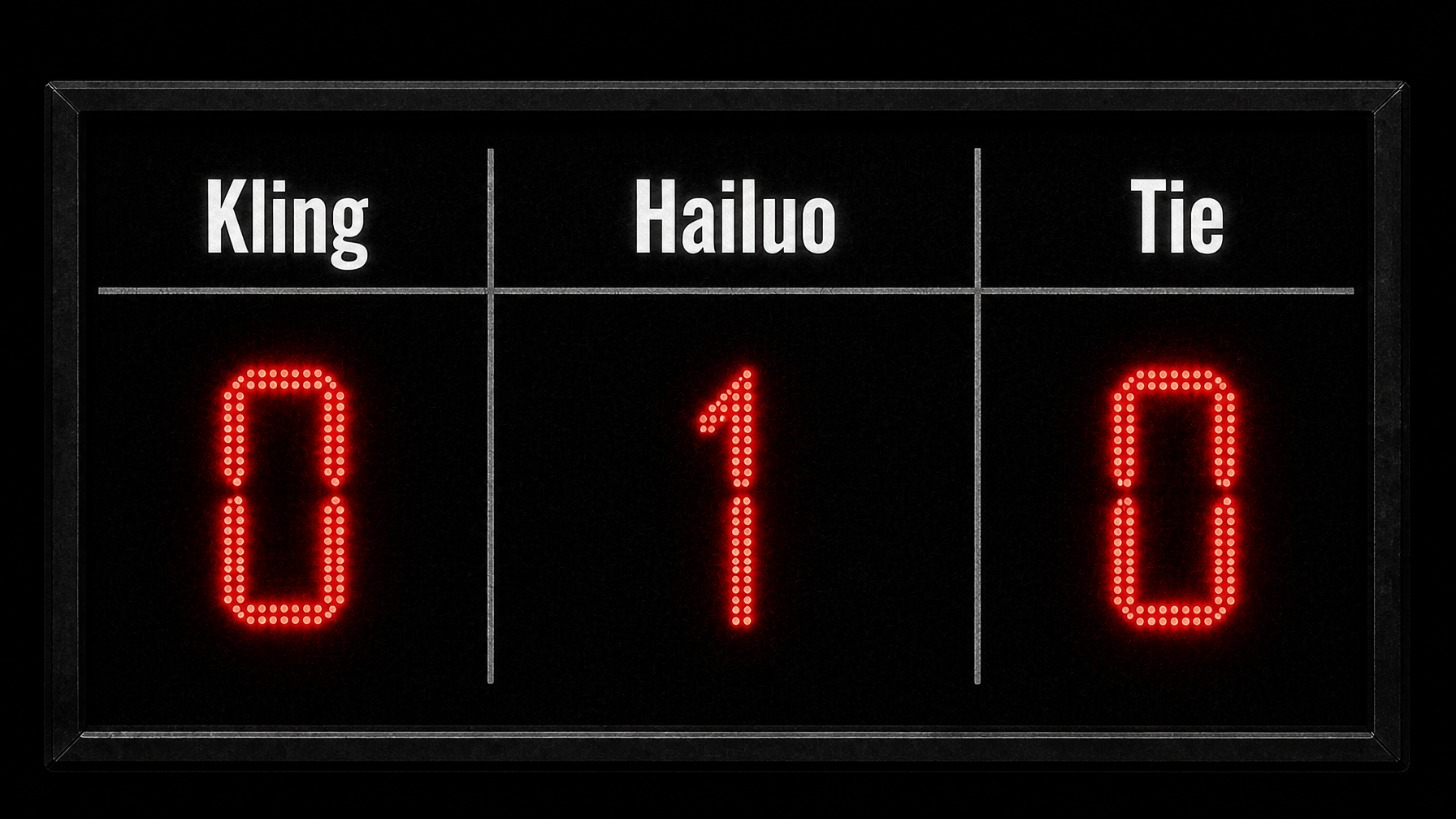
Round 1 Results: Kling 3.0 vs. Hailuo 2.0
Kling went with a side-view angle — which actually gave us more visual detail. You can see the texture, the lighting, the scene has depth. But here's the problem: the ripple didn't start until a full second after the firefly landed. That's a physics miss. Hailuo? The ripple happened right on time — the moment the firefly touched down, that ripple spread. Nice. But the camera was pointed straight at the head of the drop, so you lose almost all the surface detail. Hailuo wins for following directions.
Round 2
Image to Video:
"Animate this scene: the sleeping dragon inside the jar begins to stir. One eye slowly opens, glowing amber. A tiny curl of smoke drifts from one nostril. The candle flames flicker in response. The dragon doesn't move — just wakes up. Slow, atmospheric, magical realism."
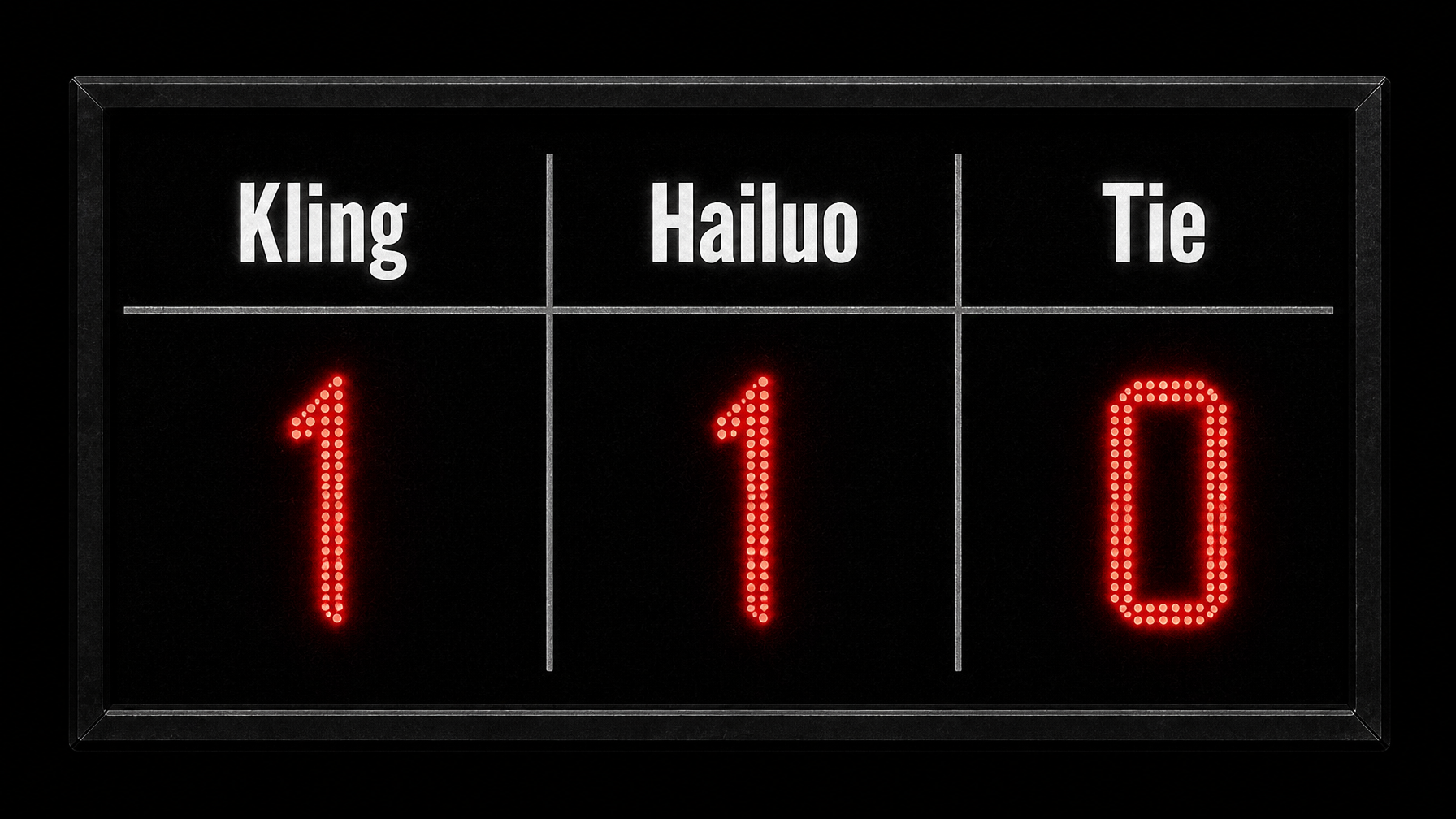
Round 2 Results: Kling 3.0 vs. Hailuo 2.0
Kling nailed the dragon itself — the movement, the expressions, solid. And the smoke came out of one nostril just like we asked. Hailuo. The smoke comes billowing out of the mouth. The dragon, one eye open, and flames flickered. But that smoke — that was a big miss. Round 2 goes to Kling easily.
Round 3
Start + End Image to Video:
"Generate a video that transitions from the first image to the second. The rain stops. The leaves lift. The robot's posture changes from slumped to upright. The sunflower blooms. 5-second clip, cinematic, emotional arc."
Start Frame

End Frame

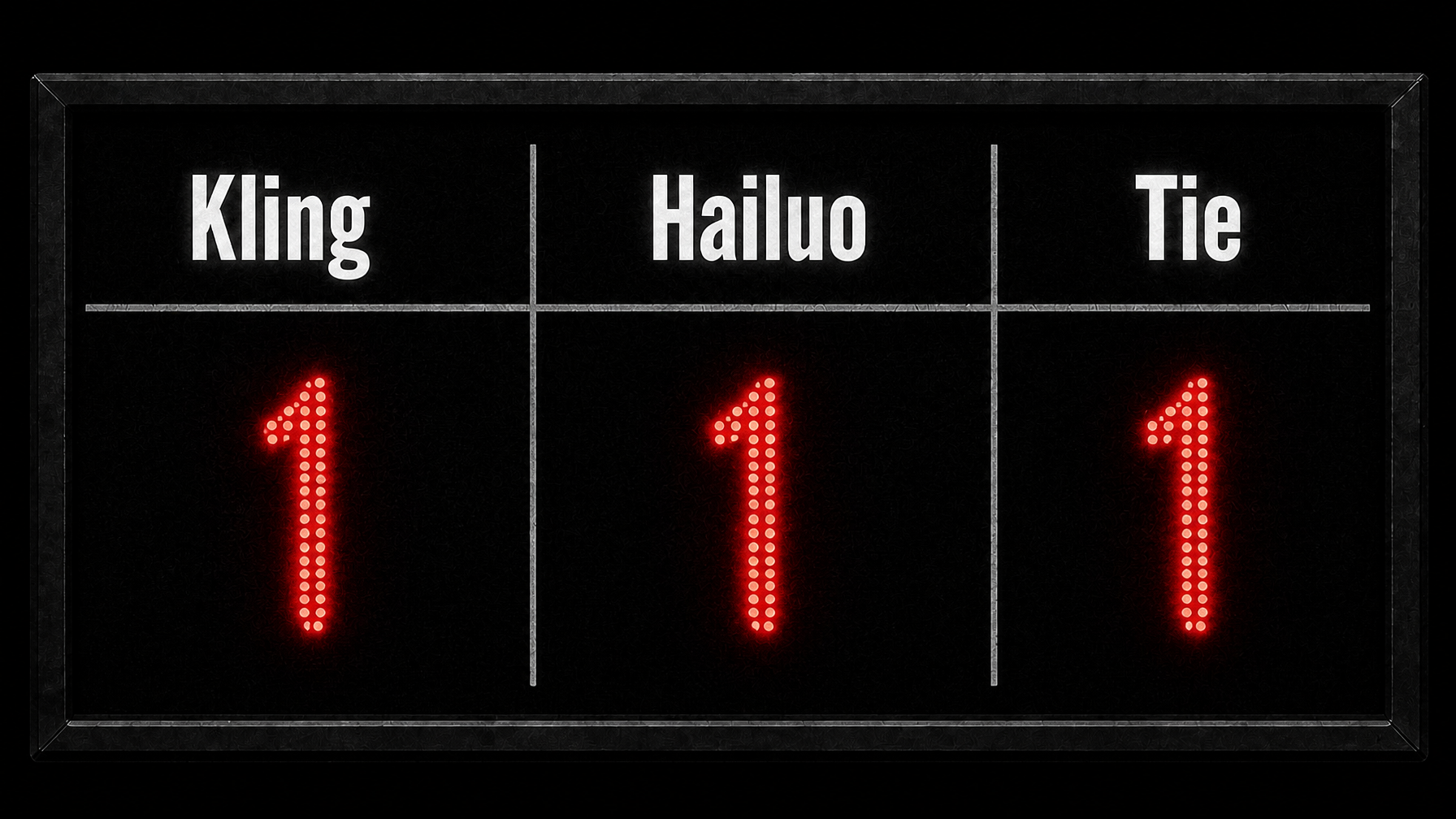
Round 3 Results: Kling 3.0 vs. Hailuo 2.0
Both models smoothly interpolated from sad to hopeful. Both maintained the robot's features throughout. Both tools are competent at this kind of controlled transformation. Neither hallucinated extra details or broke the character. I'm calling this a tie.
Round 4
Video to Video:
"Transform this footage into a cinematic sci-fi aesthetic. Keep all motion and composition identical. Add: dramatic volumetric lighting, deep shadow contrast, subtle lens flares, color grade to teal and orange. Style: IMAX blockbuster trailer."

Round 4 Results: Kling 3.0 vs. Hailuo 2.0
Neither model does Video to Video. Round 4 Tie.
Round 5
The Physics Impossible Test:
"A glass marble falls from the top of a skyscraper in ultra slow motion, perfectly reflecting the entire city skyline in its surface as it plummets. The moment it touches the ground, instead of shattering — it bounces once, rises back upward, and transforms mid-air into a soap bubble that floats gently into a blue sky. Photorealistic, 4K, cinematic gravity simulation."
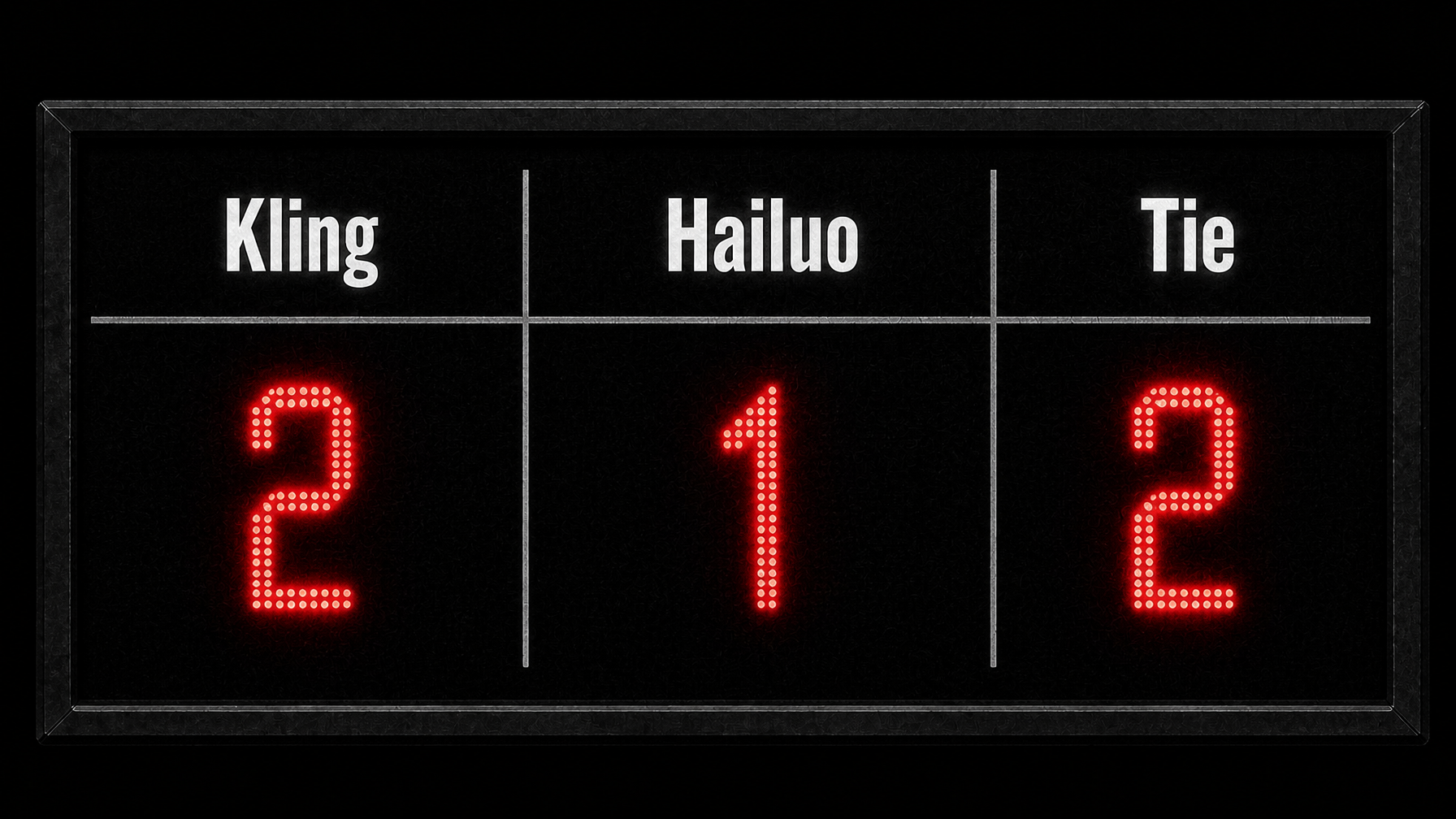
Round 5 Results: Kling 3.0 vs. Hailuo 2.0
Kling? Missed the reflection on the marble entirely. But the marble's trajectory, the surface interactions, the bubble deformation — all surprisingly good.
Hailuo? It actually got the reflection on the marble — nice touch. But... the marble is going UP. It's falling upward. That's not creative interpretation — that's just wrong.
Kling takes this round. Missing a reflection is a detail error. Having gravity work in reverse is a fundamental physics failure.
Verdict
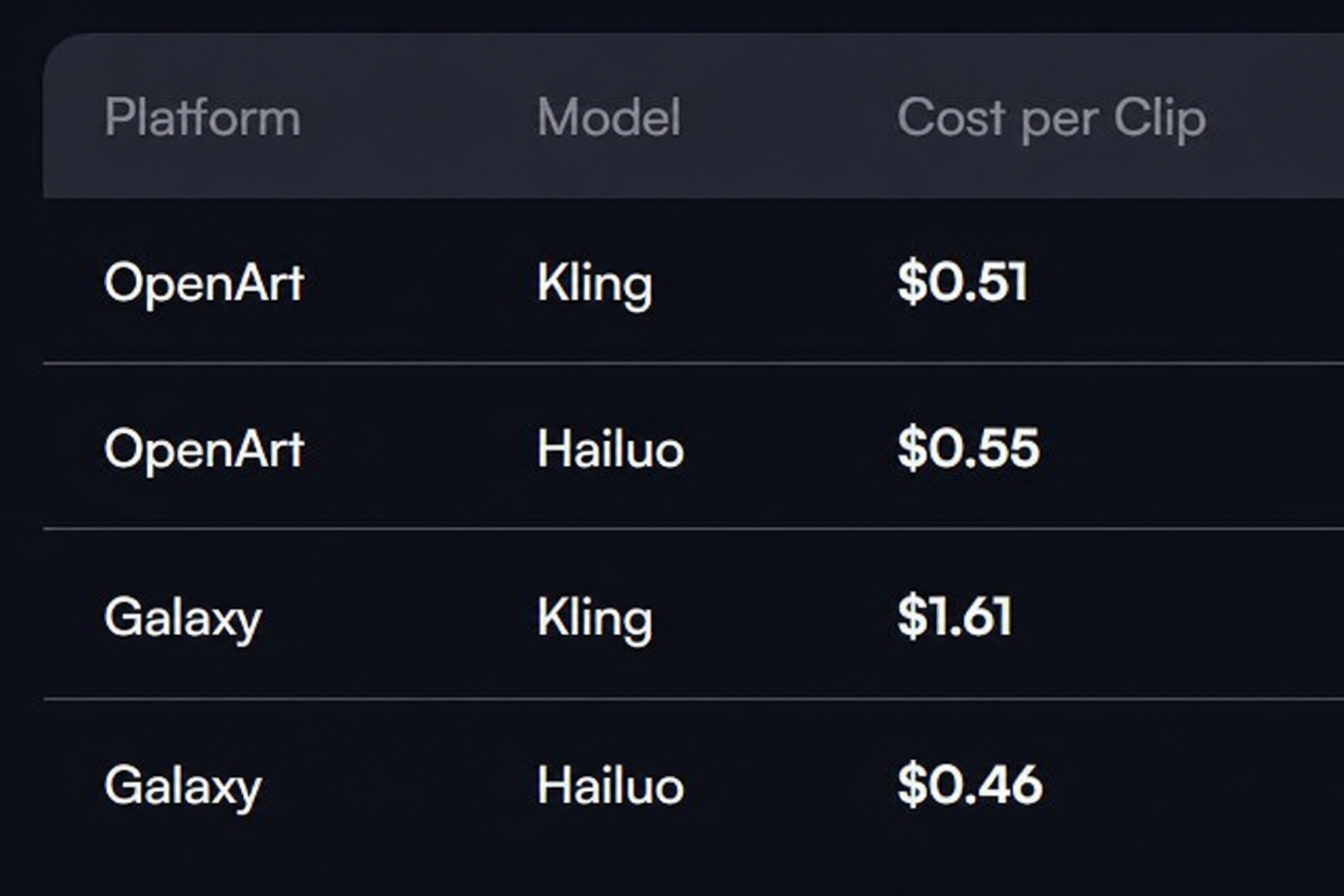
Now, let's talk cost. On OpenArt, four Kling videos averaged $0.51. Four Hailuo videos averaged $0.55. Almost identical per-video pricing. But if you use Galaxy, that first video cost $1.61 and Hailuo cost $0.46. You have to keep an eye on the price of generation.
So which one should you actually use? If you care most about prompt accuracy — especially for image to video — Hailuo is strong. It follows instructions better. But if you want better overall visual quality and fewer physics disasters, Kling 3.0 gets my recommendation. And at 51 cents a clip on OpenArt, it's the budget pick too.